Heat Exhaustion vs Heat Stroke: How to Tell Them Apart on the Jobsite

Heat exhaustion and heat stroke get mentioned in the same breath, but on a jobsite they call for two very different responses. One is a warning that a worker’s body is losing the fight to shed heat. The other is a medical emergency that can kill. The trouble is that a crew rarely sees a clean textbook case, and the minutes spent arguing over which one it is are minutes the worker does not have.

This guide lays out the difference the way a supervisor needs it: what each one looks like, what to do about it, and why the safest rule is to stop trying to diagnose and start cooling.

In This Article

The Short Answer

Heat exhaustion is the body warning you. The worker is sweating heavily, weak, dizzy or nauseated, but still thinking clearly. Heat stroke is the body’s cooling system failing, letting core body temperature climb, and it is a life threatening emergency. The clearest dividing line is the brain: confusion, slurred speech or loss of consciousness are signs of heat stroke, according to OSHA. Heat exhaustion that is not treated can progress to heat stroke, which is why the warning stage matters so much.

Heat Exhaustion vs Heat Stroke, Side by Side

The symptoms below come from the National Institute for Occupational Safety and Health (NIOSH) descriptions of heat-related illness in workers. Real cases overlap, so treat this as a guide to what you might see, not a checklist that has to be completed before you act.

Heat exhaustionHeat stroke
Thinking and speechClear. The worker may be irritable but can answer questionsConfusion, altered mental status, slurred speech, loss of consciousness
SweatingHeavy sweatingCan be hot, dry skin or profuse sweating, so sweat alone does not rule it out
Body temperatureElevatedVery high
Other signsHeadache, nausea, dizziness, weakness, thirst, decreased urine outputSeizures
What it meansThe body is struggling to keep up with the heat loadThe body’s temperature control has failed
Who calls 911Get the worker medical care. Call 911 if care is not availableCall 911 immediately

Two rows deserve a second look. Start with sweating. A common jobsite assumption is that a worker who is still sweating cannot be in heat stroke. NIOSH lists profuse sweating as a possible heat stroke sign, especially in workers who are exerting themselves. Second, the mental state row is the one that changes everything. A worker who was answering questions ten minutes ago and now is not makes the call for you.

Heat Exhaustion: The Warning

What it looks like on a crew
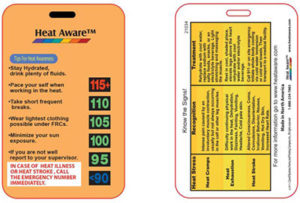
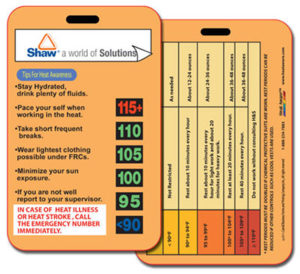
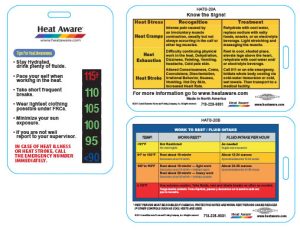
Heat Aware's Heat Cards - HATS-20A | The signs, symptoms and treatment of heat illnessesHeat exhaustion usually shows up as a worker who slows down, looks pale or flushed and soaked in sweat, complains of a headache or nausea, or needs to sit down. NIOSH also lists irritability, thirst and reduced urine output, signs of dehydration that tie directly to hydration on the job. It tends to build over a shift rather than appear out of nowhere, which is exactly why crews that know the signs catch it early. The HATS-20A version of the Heat Aware Card carries the signs, symptoms and treatment of heat illnesses on its backer, so the list is in the worker’s pocket instead of in a binder in the trailer.

What to do

The NIOSH first aid steps for heat exhaustion are:

  • Get them care – Take the worker to a clinic or emergency room for evaluation, and call 911 if medical care is not available.
  • Do not leave them alone – Someone stays with the worker the whole time.
  • Move them out of the heat – Shade or an air-conditioned space, and remove extra clothing, including shoes and socks.
  • Cool them down – Cold compresses or cold water on the head, face and neck.
  • Fluids – Encourage frequent sips of cool water.

A worker treated for heat exhaustion has already told you the work and rest schedule is not keeping up with the conditions. That is information for the rest of the crew, not just the person on the bench.

Heat Stroke: The Emergency

What it looks like on a crew

Heat stroke can follow a period of heat exhaustion or come on fast during heavy work in heat, especially in heavy or impermeable clothing. The signs NIOSH lists are confusion, altered mental status, slurred speech, loss of consciousness, hot and dry skin or profuse sweating, seizures and a very high body temperature. NIOSH also warns that heat stroke can be fatal if treatment is delayed. For more on spotting it during a shift, see how to recognize heat stroke on the jobsite.

What to do while you wait for EMS

  • Call 911 – Immediately. Stay with the worker until help arrives.
  • Move them to shade – Or a cooler area, and remove outer clothing.
  • Cool them fast – A cold water or ice bath if one is available, otherwise wet the skin, use cold wet cloths or soak their clothing.
  • Move air – Circulate air around the worker to speed cooling.
  • Target the big blood vessels – Place cold wet cloths or ice on the head, neck, armpits and groin.

Cooling starts before the ambulance arrives, not after. Our guide to heat stroke treatment and warning signs covers why rapid cooling is the goal and how ice water immersion and evaporative cooling compare.

Why You Should Not Try to Tell Them Apart in the Field

OSHA’s guidance on heat first aid is blunt: do not try to diagnose which illness is occurring, and when in doubt, cool the worker and call 911. OSHA also notes that diagnosis is often difficult because the symptoms of several heat illnesses can show up together, and that a worker with heat-related illness should never be left alone.

That turns the comparison above into something more useful than a diagnosis. Its job is to make sure nobody talks themselves out of calling for help because the worker is “still sweating” or “just tired.” If the person in front of you has any of the heat stroke signs, or you are not sure, the response is the same: cool and call.

Write that rule down. A written heat illness prevention program should name who makes the call, where the nearest cooling is, and how a crew gives EMS a usable location on a large site. Those details are what make the first five minutes go right.

The Other Heat Illnesses on the Same Spectrum

Heat exhaustion and heat stroke are the two that get the attention, but NIOSH lists several others that often show up first and deserve a response of their own:

  • Heat cramps – Muscle cramps, pain or spasms in the abdomen, arms or legs. NIOSH advises water plus a snack or drink that replaces carbohydrates and electrolytes every 15 to 20 minutes, and avoiding salt tablets.
  • Heat syncope – Fainting, dizziness or lightheadedness after standing a long time or getting up quickly. Sit or lie down somewhere cool and drink slowly.
  • Heat rash – Clusters of red bumps or small blisters, usually on the neck, upper chest, groin and elbow creases. Move to a cooler, less humid area and keep the rash dry.
  • Rhabdomyolysis – Muscle pain or cramping, weakness, and tea or cola colored urine, sometimes with no symptoms at all. NIOSH advises stopping activity, drinking fluids and getting immediate medical care.

A crew that recognizes cramps and fainting as heat signs is a crew that is paying attention before anyone reaches the exhaustion stage. For the bigger picture, see heat stress causes, symptoms and prevention.

Who Is Most at Risk

Anyone working in extreme heat can develop either illness, but some workers reach the warning signs sooner. Two kinds of risk stack up on a jobsite.

Risk from the job. Workers who are new to the heat or coming back after time away are not yet acclimatized. Heavy exertion, radiant heat from equipment, and heavy or impermeable PPE all add to the heat load and make it harder for sweat to cool the body.

Risk from the person. OSHA lists personal risk factors that include obesity, diabetes, high blood pressure, heart disease, a lower level of physical fitness, alcohol use, and certain medications such as diuretics. OSHA also notes that some medications can keep a worker from feeling the heat or sweating normally, so the usual warning signs may not show. A supervisor does not need anyone’s medical history to act on this: it is one more reason to treat every report of dizziness or confusion seriously.

Making Recognition a Crew Skill
HSMS-01 Heat Stress Management System Sign with thermometer and humidity reading for a jobsite cool down areaMost heat emergencies are first noticed by a coworker, not a supervisor or a medic. That makes recognition a crew skill, and crew skills come from repetition and from having the information in front of people when it matters.

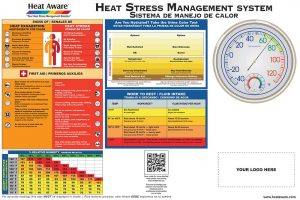
Three practical steps help. Cover heat exhaustion and heat stroke in a short heat stress toolbox talk before the hot season and again when conditions change. Put the day’s conditions where everyone stops: the HSMS-01 Heat Stress Management System Sign shows the ambient temperature and relative humidity so a crew can see where the day falls on the heat index chart. And give each worker the warning signs in a format they will actually carry, such as a Heat Aware Card.

None of these tools treats a heat illness. What they do is shorten the time between the first sign and the first response, which is where outcomes are decided.

Keep the warning signs within reach. A Heat Aware Card with the signs and symptoms backer puts the difference between heat exhaustion and heat stroke in every worker’s pocket, next to a live temperature reading.

See the Heat Aware CardsBrowse the shop

Frequently Asked Questions

What is the main difference between heat exhaustion and heat stroke?

Heat exhaustion is the body struggling to keep up with heat, with heavy sweating, headache, nausea, dizziness and weakness while the worker still thinks clearly. Heat stroke is the body’s temperature control failing. OSHA identifies confusion, slurred speech or unconsciousness as signs of heat stroke, and heat stroke is a medical emergency.

Does a sweating worker rule out heat stroke?

Yes. NIOSH lists either hot, dry skin or profuse sweating as possible signs of heat stroke. A sweating worker who is confused or slurring their speech should be treated as a heat stroke emergency.

Does heat exhaustion lead to heat stroke if it is not treated?

Yes. Heat exhaustion that is not treated can progress to heat stroke, which is why workers showing heat exhaustion signs should stop work, be moved out of the heat, cooled and evaluated.

What should you do if you are not sure which one it is?

OSHA advises not trying to diagnose which heat illness is occurring. When in doubt, cool the worker and call 911, and never leave a worker with heat-related illness alone.

How do you cool someone with heat stroke while waiting for EMS?

NIOSH recommends moving the worker to shade, removing outer clothing and cooling quickly with a cold water or ice bath if possible, or by wetting the skin, using cold wet cloths or soaking clothing, circulating air, and placing cold wet cloths or ice on the head, neck, armpits and groin.
Why Do Equipment Operators Need Heat Awareness Cards Too?

Equipment operators often work inside air conditioned cabs, and compared to most people on a worksite, they are not usually exposed to the same heat-related risks. However, equipment operators need heat awareness cards, too, for several reasons. While it may seem like equipment operators are immune to heat concerns on the job, there are good reasons to make sure they have the tools they need to track temperature.

In This Article

Six Reasons Why Equipment Operators Need Heat Awareness Cards Too

Heat awareness cards provide up to the moment information about ambient temperatures and, by extension, thermal risks. This information is important for everyone on your worksite, including your equipment operators. Here are six reasons why they should carry heat awareness cards as well.

Equipment operators transition in and out of the cab frequently

Equipment operators have to jump in and out of their cab often, either to reposition their equipment, perform safety and maintenance checks, consult with other onsite workers or refuel. Every time your equipment operators climb out of their cab, they are exposed to the same heat hazards that the rest of your onsite workers contend with. If they have heat awareness cards on them, they will be able to track those heat hazards as they get in and out of their cab.

Moving from a climate-controlled environment to a hot one can shock the system

HATS-20 Heat Aware Card with temperature scale and work and rest fluid intake backerWhile equipment operators may be protected by their air conditioned cab, working in a climate-controlled space also affects their ability to tolerate heat. As they move from inside their cab to the outside environment, the sudden increase in temperature can shock their system and increase the risk of dehydration or heat exhaustion. A heat awareness card lets an operator check the temperature every time they step down from the cab, instead of guessing.

This is where the card’s response time matters. According to the Heat Aware product FAQ, the card’s liquid crystal registers the temperature within a degree when it is used and viewed properly, and it reregisters every 20 seconds, which Heat Aware notes is important when moving from one area to another with a significant temperature change. That is the exact situation an operator is in every time the cab door opens.

Elevated heat stress impacts decision making and reaction time

If one of your equipment operators is compromised by heat illness, it will affect their ability to do their job safely. Heat exhaustion reduces reaction speed and decision making, which is particularly risky when in charge of heavy equipment. If one of your equipment operators is affected by heat stress, it is a danger for them and for any nearby workers.

Equipment operators have a wider view of the job site

Heat Aware's Heat Cards - HATS-20A | The signs, symptoms and treatment of heat illnessesEquipment operators typically have an expanded view of the worksite, as they are largely stationary and are situated off the ground. From this position, equipment operators can see if a worker is experiencing heat stress and respond faster than people on the ground.

With a heat awareness card, your equipment operators will know when heat risks are elevated and can begin looking out for their fellow workers. The HATS-20A version of the HATS-20 Heat Aware Card carries the signs, symptoms and treatment of heat illnesses on its backer, so the operator has the warning signs in hand while watching the crew.

Heavy equipment generates additional heat and elevates thermal risks

Heavy equipment creates additional heat that must be accounted for when assessing the risk of heat illness on the jobsite. Engines, hydraulic systems and metal surfaces are hotspots that can make it tougher on any workers nearby. With a heat awareness card, equipment operators can read the temperature near the machine and see whether that additional thermal energy has pushed conditions into a higher risk range. Remember that the card reads air temperature, not humidity, so pair it with a heat index chart when the air is humid.

Cab cooling systems can fail and spike heat risks

Even if your equipment operators spend much of their time in a climate-controlled cab, cooling systems can always fail. Clogged filters and poor ventilation are two reasons why climate control may be taken temporarily offline. No matter the reason, a heat awareness card in the cab tells the operator that conditions have changed, so they can take a break in a cool area, drink water and report the problem before heat stress builds.

How Do Heat Awareness Cards Provide Better Safety on Jobsites?

Heat Aware Cards are TWIC-sized, so they fit with the other cards a worker already carries, and the HATSC-30 custom card can be printed with your company’s logo and safety information. They are made with integrated liquid crystal thermometers (LCTs) that provide a rapid, accurate temperature reading. The cards are made of laminated PVC and are waterproof, according to Heat Aware, and because they are light and compact, they can be kept in a breast pocket, worn on a lanyard or kept in the cab where the operator can see them. Compared to other temperature tracking tools, heat awareness cards are inexpensive, simple to use and easy to hand out to an entire crew.

A card works best as part of a plan. Tie the temperature an operator reads to a specific response, such as more frequent breaks or a stop to cool down, and write those responses into your heat illness prevention program so everyone on the site follows the same rules.

Keep Equipment Operators and Their Coworkers Heat Aware

It may seem like the last person onsite who needs heat awareness is an equipment operator, but there are several reasons why that is not the case. Cooling systems can fail, operators have to exit their cab frequently and sudden exposure to intense heat can cause heat risks to spike, even without prolonged exposure.

The best defense against heat illness is information. Heat awareness cards provide this information in a simple, inexpensive format that helps your equipment operators know what to expect regarding heat risks. For more on how the cards are used across a crew, read Can a Heat Safety Card Save a Life?

Browse the HATS-20 Heat Aware Card, the HATS40 card with label and the HATSC-30 custom card, or see everything in the Heat Aware shop. For pricing, availability, volume and custom or branded orders, email Bryan Slaven at bryan@heataware.com.

Give every worker a temperature reading. Heat Aware Cards register the ambient temperature around the person carrying them, with a signs and symptoms or a work and rest backer, and they can be printed with your company’s branding.

See the Heat Aware CardsBrowse the shop

Frequently Asked Questions

Do equipment operators in air conditioned cabs need heat stress training?

Yes. Operators climb out of the cab to refuel, run safety and maintenance checks and talk with the crew, and each time they step into the same heat as everyone else on the site. The sudden change from a cooled cab to outdoor heat is a risk of its own, so operators belong in the same heat awareness training and procedures as the rest of the crew.

Does a Heat Aware Card read body temperature?

No. According to Heat Aware, the card registers ambient temperature, the temperature of the surrounding area, not the body temperature of the person carrying it.

How quickly does the card update when an operator leaves the cab?

Heat Aware states that the card’s liquid crystal registers the temperature within a degree when properly used and viewed, and that it reregisters every 20 seconds. That matters when moving between areas with a large temperature difference, such as a cooled cab and an open jobsite.

What should an operator do if the cab’s air conditioning fails?

Treat the cab as a hot work area until the cooling is fixed. The operator should take breaks in a cool area, drink water, report the failure and watch for early signs of heat illness, following your written heat illness prevention program.

Can heat awareness cards carry our company branding?

Yes. Heat Aware offers the HATSC-30 Custom TWIC-sized card, which can be printed with your corporate logo, colors and information specific to your health, safety and environment group. Contact bryan@heataware.com for custom and branded orders.

How to Run a Heat Stress Toolbox Talk

Heat illness does not announce itself. A worker who is sliding toward heat exhaustion usually looks like a worker having a hard morning, and the people best placed to notice are the ones standing next to him. That is what a toolbox talk is for. Ten minutes before the shift, in the language the crew actually uses, aimed at the one thing you want them to do differently today.

This is a heat stress toolbox talk you can deliver without preparation, plus the questions that come back at you and how to answer them. Awareness is the control that prevents heat illness, and a talk is how awareness gets installed in a crew rather than filed in a binder.

In this article

What to settle before you open your mouth

Read the day first. A toolbox talk that ignores the conditions in front of the crew gets tuned out in the first sentence, and rightly so. Before the talk, know three numbers and one fact.

The three numbers are the forecast high, the humidity, and the heat index the two of them produce together. Humidity is the number crews underestimate. Ninety five degrees in dry air and ninety five degrees at seventy percent relative humidity are not the same shift, because sweat that cannot evaporate does not cool anybody. The one fact is who on the crew is new, back from vacation, back from sick leave, or working in heavier gear than usual. Those are the people most likely to go down, and they are the reason to give the talk at all rather than skip it because the crew has heard it before.

Then pick one behavior. Not five. A talk that asks for five changes gets none of them. Today it might be drinking before the break rather than at it, or it might be that nobody works a hot task alone. Choose it before you start so the talk has somewhere to land.

The ten minute talk, in order

Heat Aware's Heat Cards - HATS-20A | The signs, symptoms and treatment of heat illnessesMinute one, the conditions. Say the heat index out loud and say what it means for today’s work. “It is going to feel like a hundred and four by two o’clock, and we are on the south side of the building all afternoon.” Concrete beats general.

Minutes two to four, the signs. Go through what heat illness looks like from the outside, because that is the version a crew can act on. Heavy sweating that stops. Skin that goes clammy, or goes dry and hot. Cramping. A headache. Nausea. Somebody getting quiet, getting clumsy, repeating himself, or getting short tempered for no reason. Confusion and a stumble are late signs, not early ones, and a worker who has reached them needs help immediately rather than a break. The HATS-20 Heat Aware Card carries this list on the back, which is why handing one out beats reading it from a page.

Minutes five to seven, the controls. Water, rest, shade, in that order, and be specific about all three. Where the water is. When the breaks are. Where the shade actually is on this site today, not where it was last week. If you have a heat stress management system sign in the cool down area, point at it and tell them what the thermometer and the humidity reading on it are for.

Minutes eight and nine, the one behavior. Ask for it plainly, explain why it is today’s ask, and say what it looks like done right. Then ask somebody to repeat it back. A talk where nobody speaks is a talk nobody remembers.

Minute ten, the escalation. Who to tell, how, and what happens next. If a worker is confused, stumbling, or cannot be cooled down, that is an emergency call, not a supervisor conversation. Say the words “call nine one one” rather than leaving it implied.

Teaching the buddy check so it survives contact with the job

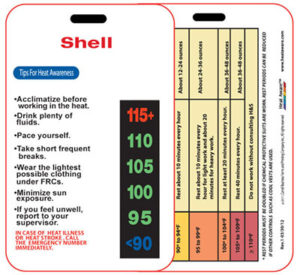
Heat Aware's Heat Cards - HATS40 | Avoid heat-related illnesses for workersMost heat programs contain a buddy system. Most buddy systems quietly stop happening by the second week of August, because “keep an eye on each other” is not an instruction anybody can follow while running a saw.

Make it mechanical instead. Name the pairs out loud at the talk. Give the check a trigger, so it happens at a moment rather than continuously: at every water break, ask your partner one question and look at him while he answers. Give them the question. “How are you doing” gets “fine” from everybody. “What did you have to drink on the last break” gets an answer you can judge, and so does asking a man to repeat the task sequence back.

New and returning workers get a different pairing

Acclimatization is the control most often missing from a program. A worker who has not been in the heat for a week has lost some of the adaptation he built, and the first days back are the dangerous ones. Pair new and returning people with someone experienced, keep their first days shorter and lighter, and say at the talk that this is deliberate rather than a favor. Working in dangerous heat you are not accustomed to is its own hazard and worth treating as one.

Props beat handouts

A handout gets folded into a pocket and washed. Something a worker carries or wears stays in the work.

Cards. A Heat Aware Card is TWIC-sized, so it goes in a wallet or behind a badge and comes back out at the next talk. The HATS40 card carries a work and rest reference on the back, which turns “take more breaks” into a specific answer.

Hard hat decals. Hard hat stickers for heat stress awareness put the message where a crew sees it a hundred times a shift without anybody having to say it again. The HADH decal reads Stay Hydrated and the HADS decal reads Drink Early, Drink Often. Heat Aware prints them with UV inks on weatherproof vinyl.

Heat Aware HSMS-01 heat stress management system sign with a thermometer and humidity reading for the cool down areaThe sign in the cool down area. A sign with a thermometer and a hygrometer on it makes the day’s conditions a shared fact instead of an argument. It has to hang in the shade to read accurately, which is worth saying at the talk, because a sign in the sun reads high and teaches the crew to distrust it.

Three talks that did not work, and what was wrong with them

Most heat talks fail in one of a few predictable ways, and each has a specific fix.

The talk that was a policy reading. A supervisor reads the heat section of the safety manual out loud, start to finish, in the same words every week. It covers everything, which is the problem: nothing in it is about today, so there is nothing for a worker to act on. The fix is to cut it to one behavior and attach it to the conditions in front of the crew.

The talk nobody could act on. A crew is told to take breaks as needed and to stay hydrated. Both are true and neither is an instruction. As needed means whatever the busiest man on the crew decides, which in practice means later than it should be. The fix is to name the thing: where the water is, when the breaks are, what counts as a drink, and who decides when the schedule changes.

The talk that was delivered to the wrong people. Everything goes to the crew and nothing goes to the supervisors. But recognizing heat illness in somebody else, and having the authority to stop work, are supervisor jobs. A crew that has been told to speak up and a supervisor who has not been told to listen produces the worst outcome of all, which is a worker who said something and was waved off. Run a version of the talk for the people who make the call, and tell the crew you have done it.

How often to run it, and how to keep it from going stale

Weekly through the hot season is a reasonable floor, daily when the heat index climbs into the range where your program calls for extra breaks, and again whenever the crew changes or the work moves to a hotter part of the site. The talk that matters most is the one on the first genuinely hot day of the year, before anybody has acclimatized.

Staleness is the real risk, and rotating one thing prevents it. One week the talk is the signs. The next it is hydration and what actually counts as a drink. The next it is a walk of the site to find where the shade and water will be. Ask a different person each week to say one thing he saw last week. A talk that only ever comes out of the supervisor’s mouth stops being heard in about a month.

What to write down afterward

Keep the record short enough that it actually gets kept. The date, the conditions, who attended, the one behavior you asked for, and anything a worker raised. Two lines and a signature sheet is plenty.

The reason to keep it is not paperwork. It is that a pattern only becomes visible in writing. Three weeks of notes saying the water station is too far from the work face is a site layout problem, and nobody would have spotted it from three separate conversations. Under the General Duty Clause an employer is responsible for recognized hazards in the workplace, and heat is one; OSHA has no heat-specific standard of its own. A record of what you told the crew, and what you changed when they told you something back, is the honest evidence that the hazard was being managed.

Put heat awareness where the work happens. Heat Aware Cards, heat stress management system signs and hard hat stickers put the temperature and the warning signs in front of the crew, and they work best as part of a written heat illness prevention program.

Browse the Heat Aware shopWhat a heat stress system includes

Frequently asked questions

How long should a heat stress toolbox talk be?

Ten minutes is enough, and shorter is better than longer. A talk that runs past about fifteen minutes stops being absorbed. Cover the day’s conditions, what heat illness looks like from the outside, where water, rest and shade are, one behavior you want changed today, and who to call in an emergency.

What should the crew be able to do after the talk?

Three things. Name two or three outside signs of heat illness in a coworker, say where water and shade are on this site today, and say who they call and how if somebody is confused or cannot be cooled down. If they can do those three, the talk worked.

How often should we hold one during the summer?

Weekly through the hot season as a floor, daily when the heat index reaches the range where your program calls for extra breaks, and again whenever the crew changes or the work moves to a hotter area. The first genuinely hot day of the year is the most important one, because nobody is acclimatized yet.

Do we need a written heat program to run toolbox talks?

No. You can start talking to the crew this week. A written program is what makes the talks consistent between supervisors and between sites, and it is what tells everybody the same thing about break schedules, water, acclimatization and escalation, so the two work together rather than one replacing the other.

For pricing, availability, volume and custom or branded orders, email bryan@heataware.com or call Heat Aware at 713-228-9331.

Can a Heat Safety Card Save a Life?

Heat exhaustion is potentially fatal at the worksite, as it can progress to heat stroke if it is not recognized and treated right away. The goal for safety personnel is to make sure workers are protected from heat dangers, and a heat safety card is a practical tool for keeping that protection in the worker’s hand.

There are several heat safety measures employers can take to reduce the risk of dehydration and, by extension, heat illnesses like heat exhaustion. One of those measures is equipping workers with TWIC-sized heat cards, printed in the same credential size many industrial sites already issue, and capable of tracking ambient temperature.

In This Article

How Do Heat Safety Cards Keep Workers Safe from Heat Stress?

If heat is a potential hazard at your worksite, you are required to protect workers under OSHA’s General Duty Clause. Standard heat safety measures include developing a heat safety and emergency plan, setting up water break stations, monitoring worker health, and adjusting work rotations when conditions are dangerously hot.

In addition to those measures, employers can equip workers directly by supplying them with heat safety cards. Here is what these cards offer:

  • Heat Aware's Heat Cards - HATS40 | Avoid heat-related illnesses for workersLiquid crystal thermometer (LCT) technology – Liquid crystal thermometers provide a rapid, accurate temperature reading. They can be built into a TWIC-sized card, so workers always have a temperature-taking tool on hand. The best defense against dehydration and heat exhaustion is information, and an LCT card gives your field personnel direct insight into heat levels where they are standing.
  • Critical heat safety information – Your heat safety cards can be printed with other reference details, like hydration guidelines, the warning signs of heat illness, or onsite emergency contact information.
  • Additional branding opportunities – Cards can also carry your company’s brand marks, which reinforces your organization’s commitment to safety every time a worker looks at one.
  • A lightweight, usable safety tool – Heat safety cards are extremely light and compact, and they fit an existing badge holder or lanyard. They are also simple to use, so they deliver consistent value to safety initiatives.
  • A cost-effective safety tool – Heat safety cards are inexpensive to produce at volume and can be laminated for added durability. That makes it easy to outfit an entire crew rather than a handful of supervisors.

Heat illness is preventable when it is recognized early and acted on. A card does not do that work by itself. What it does is put the temperature and the warning signs in a worker’s hand at the moment those things matter, which is what makes early recognition and a fast response possible. For a modest investment, many employers find it is worth outfitting their workers with that awareness. Our breakdown of how these cards add value goes deeper on the cost side.

How Do Heat Safety Cards Help Workers Recognize Dehydration and Heat Exhaustion?

Heat Aware's Heat Cards - HATS-20A | The signs, symptoms and treatment of heat illnessesHeat safety cards are meant to be worn on a lanyard or carried in a pocket for easy reference when temperatures climb. They act as a reminder of the signs to look for and what to do when heat illness emerges, and nothing matters more than recognizing what is happening and taking immediate steps. That means knowing the signs of dehydration and heat exhaustion.

Signs of Dehydration

  • Persistent thirst
  • Fatigue
  • Dizziness and loss of coordination
  • Confusion
  • Loss of skin turgor, where skin does not return to its original position after being pulled

Dehydration is a primary risk factor for heat illnesses like heat exhaustion and heat stroke. Conversely, regular hydration is one of the strongest protective measures available. If your personnel are not adequately hydrated, it can lead to heat exhaustion, which presents with the following symptoms.

Signs of Heat Exhaustion

  • Fatigue
  • Dizziness
  • Fainting
  • Nausea and vomiting
  • Headache
  • Elevated body temperature

Dehydration and heat exhaustion present with similar signs, so it is not always clear which one is causing symptoms. Both are treated in similar fashion: move the worker to a cool, shaded area, give them water, and use any available resources to lower body temperature, including cool packs and wet cloths. It is also important to seek medical treatment during or following a bout of heat illness, because it can escalate quickly and cause long term complications or even death. Training your crew to recognize heat stress on the jobsite is what turns a card into a response.

Prioritize Heat Safety with Better Tools and Better Safety Procedures

Heat is invisible, odorless, and can intensify gradually without notice, so it can produce an emergency quickly. That is why it is important for employers to establish a heat safety plan ahead of time. A plan should include:

  • Identifying any potential heat hazards at the worksite
  • Acquiring and inventorying heat safety resources, including heat safety cards, cold packs, and electrolyte tablets
  • Monitoring worksite conditions for changes in temperature
  • Altering work schedules or switching to light duty
  • Recording contact information for a nearby medical facility

Heat Aware's Heat Cards | HATSC-30: The Custom Twic Sized Card | Keep workers safe from a heat-related illnessEmployers who combine these measures give their workers the best available protection against heat risks. If you are responsible for safeguarding worker health onsite, heat safety cards and the procedures around them are a straightforward place to start. Our guidance on building a heat safety plan covers the emergency action plan side in more detail.

Heat Aware Cards are available in standard, labeled, and fully custom versions in our online shop. For pricing, availability, volume orders, or a card branded for your company, contact Bryan Slaven at bryan@heataware.com.

Give every worker a temperature reading. Heat Aware Cards register the ambient temperature around the person carrying them, with a signs and symptoms or a work and rest backer, and they can be printed with your company’s branding.

See the Heat Aware CardsBrowse the shop

Frequently Asked Questions

What is a heat safety card?

A heat safety card is a durable reference card printed in the same TWIC credential size that many industrial sites already issue, so it fits an existing badge holder or lanyard. It carries heat safety information such as warning signs and hydration guidance, and some versions include an integrated liquid crystal thermometer for reading ambient temperature. It is not a TWIC credential and does not serve any identification or access purpose.

What is a liquid crystal thermometer?

A liquid crystal thermometer, or LCT, is a simple temperature-taking tool that provides a rapid, accurate reading. LCTs use thermochromic liquid crystals that change color as temperature changes, and they can be encapsulated and scaled down to fit inside a TWIC-sized card, which gives workers temperature monitoring wherever they are working.

Who can benefit from carrying a heat safety card?

Anyone who works where heat hazards are present. Construction and maintenance crews are the most common examples, and workers in manufacturing, refineries, bakeries, industrial settings, and commercial kitchens face the same exposure. Athletic programs use them as well, since heat illness risk on a practice field follows the same pattern as it does on a jobsite.

Can a heat safety card be branded for our company?

Yes. Cards can be printed with your company’s brand marks along with the reference information your crews need, such as onsite emergency contacts or your own heat response thresholds. Contact Bryan Slaven at bryan@heataware.com to discuss a custom or branded card for your operation.

How to Prevent Heat Illness in Workers Using Heavy PPE or Masks

Heat illness is a threat to any worker laboring in elevated temperatures, but it tends to be more intense with a faster onset in workers using heavy personal protective equipment (PPE) or masks. This has been confirmed by OSHA and CDC, which points out that personal protective equipment increases heat illness risks because:

  • PPE traps environmental and exertion-related heat close to the body
  • PPE often interferes with the body’s ability to remove heat by sweating
  • PPE is heavier and therefore requires more exertion to move (which produces heat)

Any piece of PPE can increase heat illness risks, including certain aprons, gowns and caps, face shields, masks, respirators, gloves and boots. If your workers need this equipment to perform their jobs safely, it’s important to prioritize heat safety.

Heat Risks When Workers are Wearing Heavy PPE or Masks

Heavy PPE and masks elevate heat illness risks on their own, but there are additional environmental and work factors that can exacerbate these risks. They include:

  • Isolated heat sources like commercial ovens and furnaces
  • Trapped interior heat, which can emerge from many sources, including windows
  • High-effort work and exertion
  • Poor access to water and shade

For employers, the mission is to control these risk factors and provide workers with safer conditions.

Five Ways to Prevent Heat Illness in Workers Using Heavy PPE or Masks

Heat illness is a potential killer if it isn’t accounted for and if preventative measures aren’t put in place. Those preventative measures may include the following:

  • Provide personnel with the right monitoring tools – Heat risks climb with the temperature, so it’s important for onsite personnel to track it. When certain temperature thresholds are reached, protective measures may be implemented to protect workers.
    A popular option is to equip workers with TWIC cards that are fitted with liquid crystal thermometer (LCT) technology. LCTs provide an accurate temperature reading quickly, and they weigh next to nothing, so they can be worn or carried with ease. TWIC cards with LCTs can also be branded with company marks or printed with important reminders (like emergency procedures).
  • Increase monitoring when workers are wearing PPE – If workers must wear PPE, safety personnel should increase their vigilance and be ready to check worker vitals more often. And workers must be encouraged to watch each other when the heat is on. Workers wearing PPE should never be on their own.
    Part of this vigilance involves training workers to notice the signs of heat illness. Those signs include weakness, loss of coordination, confusion, slurred speech, nausea and vomiting, elevated body temperature, and in severe cases, loss of consciousness. If any of these signs are present in a heat-stressed worker, your personnel should notice it immediately and be ready to implement emergency procedures.
  • Implement additional work and water breaks – When workers are wearing PPE, they’ll sweat more, and they won’t cool off as easily when they do sweat. To counter this additional heat stress, your safety personnel should require additional water breaks. Adequate hydration is the surest protective measure against heat illness, but workers often neglect to drink enough water unless it’s prioritized. Reinforce this with your supervisors so it becomes part of the expected safety routine.
  • Establish a cool area that’s always ready for workers – Heat illness is 100 percent preventable and easy to avoid if you prepare for it. Part of that preparation is setting up a cooling station in a shaded (preferably interior) setting. This spot should be cool and have access to cool running water, along with your other heat safety resources.
    If a worker develops heat illness, this is where they should be moved to and treated until the acute heat risks have passed.
  • Have an heat safety emergency action plan in place for heat-related emergencies – It’s too late to plan for an emergency once the emergency occurs. Instead, your organization should have an emergency action plan (EAP) ready to go if a worker does experience heat illness.
    An EAP should include a list of all onsite heat safety resources (cold wraps, electrolyte tablets, etc.) and a list of emergency steps that personnel should take. This includes where to take the afflicted person for treatment and what medical facility to contact for further treatment. Heat illness will progress rapidly if treatment is not administered right away, so workers should know exactly what to do, and when.

Heavy PPE is a Heat Risk That Can Be Mitigated with the Right Safety Measures

Heat illness can leave workers with permanent, potentially fatal complications, and the risk of experiencing heat illness climbs with PPE use. However, there are safety processes that employers can implement to protect those vulnerable workers. They include equipping workers with heat tracking tools (like LCT-modified TWIC cards), ramping up monitoring efforts, implementing additional water breaks and developing a heat-specific emergency action plan. By taking these critical steps, you can minimize worksite heat hazards and shield your employees from dangerous heat illness.

Put heat awareness where the work happens. Heat Aware Cards, heat stress management system signs and hard hat stickers put the temperature and the warning signs in front of the crew, and they work best as part of a written heat illness prevention program.

Browse the Heat Aware shopWhat a heat stress system includes

Recognizing Heat Stress on the Jobsite

Heat stress is a constant threat on many worksites, including interior jobsites where the sun may not be a concern. Commercial ovens, furnaces, industrial machinery, and even large windows are thermal energy sources which can expose workers to elevated heat stress.

If your worksite contains heat hazards like these, your safety personnel and your employees should be able to recognize heat stress while on the job. Heat illness can be successfully treated if it’s identified early, and that means understanding what heat stress looks like and how it affects workers.

What are the Signs of Heat Stress?

Hundreds of thousands of workers experience some form of heat illness every year. This includes milder issues like heat cramps or heat rash, and serious, potentially life-threatening heat illnesses like heat exhaustion or heat stroke. It’s especially important for workers and safety personnel to respond quickly if someone onsite develops heat exhaustion, which presents with the following symptoms:

  • Skin that’s cool and clammy – goosebumps are common even in the sun
  • Fatigue
  • Faintness and dizziness
  • Nausea or feeling sick
  • Muscle cramps
  • Headache
  • Blood pressure dysregulation

These symptoms may develop quickly, or they may emerge slowly. In either case, if the above symptoms of heat illness are present, the affected worker must be removed from any thermal stresses and treated – potentially at a medical facility.

If heat exhaustion isn’t addressed promptly, it may progress to heat stroke, which presents with many of the same symptoms as heat stress, like headache, cramps and nausea. However, since heat stroke is a late-stage version of heat illness, its symptoms are more severe and may include:

  • Altered mental state, such as confusion, irritability or delirium
  • Loss of consciousness or loss of muscle control
  • Rapid, shallow breathing
  • Rapid, weak pulse
  • Extremely high body temperature (in excess of 104 degrees Fahrenheit)

Heat stroke is a medical emergency that can quickly progress to permanent or fatal complications if not addressed. Specifically, medical experts urge treatment within 30 minutes of developing heat stroke, as this will greatly reduce the risk of developing permanent disabilities.

How to Respond to Heat Stress on the Jobsite

The first step in protecting workers is ensuring everyone knows what heat stress looks like, including safety personnel, supervisors and workers. The second step is having an emergency action plan (EAP) in place to mitigate heat illness when it does appear. Every EAP should be tailored to the jobsite to ensure maximum effectiveness and typically includes the following:

  • A review of all identified hazards on the worksite – Every EAP includes a list or diagram of all potential hazards on the jobsite. Some EAPs specify every hazard, such as falls or vehicle traffic, while others are hazard specific. Some employers develop a heat-specific EAP if there are several heat sources or heat traps present. This can improve awareness of those heat hazards and facilitate preventative measures.
  • An inventory of all onsite heat safety resources – To treat or prevent heat illness, safety personnel should have some basic resources on hand, like cool wraps or cooling gaiters, electrolyte tablets and access to cool, clean water. Your EAP should detail what resources are available onsite and where those resources are located for rapid response purposes.
  • A list of heat safety procedures to mitigate potential heat hazards – Employers mitigate the risk of heat stress by implementing different work rotations, increasing the number or frequency of breaks or through other dynamic safety measures. These should be detailed in the EAP and integrated into your training approach.
  • A list of emergency medical procedures to enact in response to heat illness – If a heat-related emergency does occur, your EAP should clearly lay out the appropriate response. This includes emergency treatment protocols such as where to take the affected worker, who to contact, what to do to reduce the worker’s body temperature, and so on. Your supervisors will reference the EAP in an emergency scenario, so be as detailed here as possible.
  • Contact information for all relevant parties – In the event of an emergency, there are several parties to contact for treatment and reporting purposes. This includes a nearby medical facility where the affected worker will be taken to for treatment. It also includes contact information for any supervisors or safety personnel responsible for enforcing heat safety measures.

Three Steps Employers Can Take to Reduce Heat Stress on the Jobsite

In addition to developing an EAP, employers can take a few basic steps to ensure their worksite is guarded against heat stress, including:

  • Equipping workers with heat monitoring tools – Field workers are typically at the highest risk of heat stress, so many employers focus on them first. And a basic, inexpensive way to do so is by equipping onsite personnel with temperature-taking tools. A popular option is to hand out TWIC cards with a liquid crystal thermometer (LCT) integrated into the card itself.LCT-modified TWIC cards serve dual purposes for employers. For one, it can include the company’s branding or heat safety measures for easy reference. And two, these cards can be used to take a quick and accurate temperature reading – so workers know exactly when it’s time to elevate heat safety protocols.
  • Ensuring access to cool water and cooling stations – Regular, adequate hydration is key to staving off heat stress and should be the number one priority for your safety managers. No matter the conditions on the ground, workers need access to cool, potable water. They are also entitled to regular breaks to ensure they have time to hydrate and acclimate to stressful conditions.
  • Modifying work patterns when thermal stresses are elevated – There are days where little can be done to blunt the effects of extreme heat. If heat stresses will be elevated throughout the workday, consider modifying work rotations to either prioritize less strenuous, less hazardous work – or rotate workers quickly through stations to ensure no one person is exposed to excessive heat stress. In extreme circumstances, it may be necessary to schedule work at night and prevent thermal stresses due to sun exposure.

In short, supervisors and safety personnel must be adaptable when dealing with heat hazards. Heat is invisible, odorless and seemingly harmless, right up to the point where worker health is potentially affected. It’s important to be proactive when heat is a threat and ensure there are procedures in place when workers are stressed from the heat.

Give Your Workers a Chance Against Heat Stress with the Right Training and Tools

Heat stress is one of the most common hazards for workers on the jobsite. It’s also easy to forget about, as heat is a silent, invisible threat. However, there are proven measures that every employer can take to ensure their worksite is protected from heat stress. This includes equipping your workers and safety personnel with the right tools and resources and ensuring there’s an EAP in place that your employees are trained on. This will maximize emergency preparedness for everyone onsite – which can literally be the difference between life and death.

Put heat awareness where the work happens. Heat Aware Cards, heat stress management system signs and hard hat stickers put the temperature and the warning signs in front of the crew, and they work best as part of a written heat illness prevention program.

Browse the Heat Aware shopWhat a heat stress system includes

Frequently asked questions about recognizing heat stress

What is the difference between heat stress and heat illness?

Heat stress is the total heat load on a worker: air temperature, humidity, radiant heat from the sun, ovens or furnaces, the effort of the work and the clothing being worn. Heat illness is what happens when the body can no longer shed that load, ranging from heat rash and heat cramps up through heat exhaustion and heat stroke. Recognizing heat stress early is how a crew catches the problem before it becomes heat illness.

What are the early signs of heat stress a supervisor should watch for?

Watch for the changes you can see from the outside: a worker who slows down, goes quiet, looks pale, or has cool, clammy skin or goosebumps in the heat. Ask about headache, dizziness, nausea and muscle cramps, because workers rarely volunteer them. Any one of these is the signal to move the worker out of the heat, get water into them and keep watching, not to let them push through to the end of the task.

How do you tell heat exhaustion from heat stroke on the jobsite?

The clearest dividing line is the worker’s mental state. Heat exhaustion brings fatigue, dizziness, nausea, headache and cramps, but the worker stays alert and makes sense. Confusion, irritability, odd behavior, loss of muscle control or loss of consciousness point to heat stroke on the jobsite, along with rapid, shallow breathing and a rapid, weak pulse. Treat heat stroke as a medical emergency: call for emergency help and start cooling the worker right away.

What should happen the moment someone shows signs of heat stress?

Follow your emergency action plan. Move the worker away from the heat source to shade or a cool area, loosen or remove heavy outer layers, give cool water if they are alert, and do not leave them alone. If symptoms do not improve quickly, or any sign of heat stroke appears, call for emergency medical help. Supervisors should know ahead of time where the cooling supplies are, which medical facility to use and who to notify, because there is no time to work that out during the event.

Can workers develop heat stress indoors?

Yes. Commercial ovens, furnaces, industrial machinery and even large windows add thermal energy to an indoor jobsite, and enclosed spaces trap heat and humidity. Bakeries, refineries and manufacturing facilities can expose workers to heat stress on days when the outdoor forecast does not look dangerous. Check the temperature where the work is actually being done, not just the weather report.

How do Heat Aware Cards help a crew recognize heat stress conditions?

A Heat Aware Card reads the air temperature where the worker is standing, not body temperature. According to Heat Aware’s product FAQ, the liquid crystal registers within a degree and reregisters every 20 seconds, which matters when a worker moves from one area into a hotter one. The card does not read humidity, so pair it with a heat index chart for workers or the heat stress management system sign. The card tells the crew that conditions have changed; the response still comes from your training and your plan.

Who on the jobsite should be trained to recognize heat stress?

Everyone. Workers are usually the first to notice when a coworker is off, supervisors decide when to stop work, and safety personnel run the response. A short, regular heat stress toolbox talk keeps the warning signs fresh, and a written heat illness prevention program makes sure everyone is working from the same break schedule, water plan and escalation steps.

Heat Related Illness Prevention: Eight Essential Tips to Staying Safe in the Heat

When the weather warms up, the chances of heat related illness go up, and prevention becomes key for employers. Here are 8 essential tips to keep your workers safe in the heat:

  1. Train workers to recognize the signs and symptoms of heat illness
  2. Provide workers with specialized tools, like liquid crystal thermometers (LCTs)
  3. Post safety reminders (like occupational signage) to improve heat safety compliance
  4. Provide easy access to hydration stations and cold water
  5. Know who is at elevated risk of heat related illness
  6. Consider lighter work rotations when temperatures rise
  7. Have an emergency action in place for when heat illness does emerge
  8. Keep an inventory of emergency supplies for heat emergencies

Heat is a constant threat to workers exposed to outdoor summer conditions – or workers exposed to heat sources inside. In both cases, the above tips will protect people from serious, potentially fatal injury.

Training Workers to Recognize the Signs and Symptoms of Heat Illness

The first step to preventing heat illness is knowing what it looks like. And in the majority of cases, this means heat exhaustion or its more dangerous cousin – heat stroke.

Both generally present the same way, except heat stroke is a true medical emergency. Relevant signs and symptoms include:

  • Excessive sweating, or a complete lack of it
  • Confusion and slurred speech
  • Loss of balance
  • Irritability
  • Fatigue
  • A rapid or weak pulse
  • Nausea and vomiting
  • Loss of consciousness

If any of the above signs are present with any of your workers, coworkers and safety personnel should be ready to respond appropriately.

Providing Workers with the Right Tools, Like Liquid Crystal Thermometers (LCTs)

Ideally, your workers will know exactly when they are dealing with risky conditions – and to do that, they need to have the right tools on hand. And in the case of thermal risks, this means temperature-taking tools like liquid crystal thermometers (LCTs).

LCTs are compact and lightweight – to the point where they can be integrated into TWIC employee cards. They provide an accurate reading within seconds and are extremely cost effective – especially when manufactured en masse. Pass out the heat aware cards to your workers so they can keep a close eye on potentially hazardous conditions.

Posting Safety Reminders Like Occupational Signage to Improve Safety Compliance

Heat safety is workplace safety, and workplace safety must be constantly reinforced to ensure everyone is ready. A simple, proven way to do this is to install safety signage in areas where hazards are present. For heat hazards, this means installing safety signage close to any heat sources (like ovens or furnaces).

When heat is ubiquitous and impossible to contain, occupational signage can be used to remind workers to hydrate, point out essential safety resources (including safety wear) and other essential worksite safety procedures. This can keep your employees in an essential state of readiness.

Providing Easy Access to Hydration Stations and Cold Water

Frequent hydration is essential to preventing heat related illness, and that’s the employer’s responsibility to provide. Hydration stations should include cold, clean water that’s refilled as needed. And to improve cooling further, it’s a good idea to locate hydration stations in shaded areas with circulating air.

Make sure workers are given frequent breaks to rehydrate and increase this frequency further when temperatures rise to threatening levels.

Identifying Workers Who are at an Elevated Risk of Heat Related Illness

Some employees are at a greater risk of heat illness than others. This includes older workers, workers who haven’t acclimated to the heat, workers in poor overall health, and workers with certain chronic conditions. It’s important for the company’s safety personnel to identify who is at an elevated risk of heat related illness and monitor them closely when heat risks are elevated. For example, onsite medical personnel can take regular vital readings to identify the early signs of emerging heat illness. These readings can be taken more often for high-risk personnel.

Switching to Lighter Work Rotations When the Higher Temperatures Arrive

Work rotations can be changed up when heat risks are elevated, allowing for production to continue without putting any one employee at additional risk. Lighter work rotations, or work rotations away from sun or heat exposure can help workers cool down faster while remaining busy. Adjusting work rotations is also a good idea when high risk personnel are on site and need to be shielded from extreme heat.

Having an Emergency Action Plan (EAP) for When Heat Illness Does Strike

An emergency action plan (EAP) is a formal response plan that companies put together for certain emergency situations. Some organizations use this approach to develop a heat-specific EAP that’s intended for heat related illnesses only. If your worksite has to contend with heat hazards, then a heat-specific EAP makes sense.

Heat-specific EAPs should include an inventory of all heat emergency supplies and their location. It should also include the company’s emergency response procedures, as well as the contact information for a nearby medical facility, and who to contact in the event of an emergency.

Once the organization creates an EAP, the next step is to train personnel on its details to ensure emergency preparedness.

Keeping an Inventory of Emergency Supplies on Hand for Severe Heat Illness

The goal with heat illness is prevention, as heat illnesses are 100 percent preventable. However, it’s essential for employers to keep potentially life-saving emergency supplies on hand should heat illness emerge. This includes cool packs, electrolyte replacement tabs and other rapid rehydration and cooling supplies. Your organization’s EAP should make a note of these supplies and their location, and your workers should be trained on their use.

These Heat Related Illness Prevention Tips Can Make the Difference for Your Employees

Heat exhaustion, heat stroke and other heat related illnesses can leave workers with permanent complications, and even fatal injury. Since heat is everywhere and invisible, it tends to sneak up on vulnerable people, like those laboring outdoors or in heavy duty industries.

Heat is insidious and dangerous, but the above prevention tips will ensure your worksites have it under control and are prepared if heat does cause a medical emergency.

Put heat awareness where the work happens. Heat Aware Cards, heat stress management system signs and hard hat stickers put the temperature and the warning signs in front of the crew, and they work best as part of a written heat illness prevention program.

Browse the Heat Aware shopWhat a heat stress system includes

A Complete Guide to OSHA and Heat Stress in the Workplace

Heat stress is a constant threat to workers in many industries, to the extent that OSHA has regulations in place to ensure heat safety in the workplace. Specifically, OSHA’s General Duty clause requires employers to ensure their employees are safe from all identifiable hazards at the work site.

Prioritizing heat safety is also the right thing to do, as heat illness can result in long-term, even fatal effects on workers. Many researchers assert that official data doesn’t capture how many workers die every year due to heat stress on the job, but some data available confirms that dozens of workers suffer fatal heat illnesses every year.

This guide is for employers looking to improve workplace safety and ensure they are in compliance with OSHA regulations.

Risk Factors for Heat Stress

Heat stress leads to heat illness, so minimizing its impact on workers is paramount. That starts with identifying heat stress risk factors, which include:

  • Heat hazards – The most obvious risk factor is the presence of heat-generating sources, like ovens, furnaces and areas where industrial machinery is outputting a lot of thermal energy into the environment (assembly lines are one example).
    Outdoor work typically means one difficult-to-avoid heat hazard: the sun. Duration of sun exposure is an essential data point to track in this case.
  • Work intensity – In workplaces where moderate to intense activity is required, exertion will increase the risk of heat illness. Extended periods of work in hazardous conditions will also increase the chances of experiencing heat illness.
  • Protective wear – Personal protective equipment (PPE) protects against environmental hazards but doesn’t ventilate well and will therefore trap a lot of heat.
  • Certain health conditions and medications – People with certain health conditions, like cardiovascular problems, are at a higher risk of developing heat illness and more likely to experience severe symptoms.

Symptoms of Heat Related Illness

Heat illness may emerge gradually or suddenly. In most cases, there is a brief period of time during which symptoms are present and others have time to respond and help. Recognizing the symptoms of heat illness is critical for a proper emergency response then. Here’s what to look for:

  • Confusion or irritability
  • Loss of balance (ataxia) or weakness
  • Excessive sweating or a complete lack of it
  • Skin that’s clammy or pale
  • Muscle cramps
  • Nausea and vomiting
  • A weak pulse
  • Loss of consciousness

If any of the above signs are present, the worker should be removed from hazardous conditions and have treatment promptly administered.

OSHA Regulations on Heat Stress

OSHA doesn’t have any heat-specific safety regulations on the books, but the General Duty clause also applies to heat hazards. OSHA recommends employers adopt the heat safety standards published by The National Institute for Occupational Safety and Health (NIOSH).

There are several state-level and heat safety regulations, too – published in California, Colorado, Minnesota, Oregon and Washington.

There is momentum toward OSHA publishing heat-specific regulations. In fact, one was proposed in July 2024 – a rule that would require employers to enact specific safety provisions (additional breaks, additional health monitoring, etc.) when certain temperature thresholds are reached. It’s likely that OSHA will eventually publish safety regulations for heat hazards specifically, given the increased scrutiny in this area.

Heat Illness Prevention Strategies in the Workplace

There are many measures employers can implement to improve heat safety, including:

  • Better hydration and nutrition guidelines – Fluid and electrolytes are lost to excessive sweating, which leads to heat illness symptoms. Replacing both is essential to warding off heat exhaustion and heat stroke, and this starts with better hydration and nutrition. Specifically, choosing hydration and electrolyte-replacing foods and drinks, like fluid-rich fruits and sports drinks. Employers are responsible for providing workers with adequate water and breaks to replenish fluids. As the temperature climbs, workers will need water breaks more frequently and will need more water to prevent heat illness.
  • Monitoring workers’ health – Elevated temperatures will place additional stress on workers, and this can mean danger for workers with pre-existing health conditions.
    When conditions are hazardous, onsite safety personnel must be ready to step in and check worker vitals periodically to ensure any signs of heat illness are spotted immediately. High-risk workers with significant health conditions should be monitored closely and rotated to lighter duty, if possible.
  • Preparing an emergency response – OSHA recommends employers develop heat-specifical emergency action plans (EAPs) to ensure a rapid response if heat illness does emerge.
    An EAP should outline the treatment procedures responding personnel will take if a worker experiences heat illness. EAPs outline treatment and provide an inventory of emergency response resources (and their location) and contact information for a nearby hospital or emergency room. EAPs give workers the information they need to respond quickly and effectively.
  • Providing training and educational resources to employees – Once your organization has its heat safety standards in place, they must be reinforced through repeated training drills and safety-focused talk. Ultimately, all forms of workplace safety – including heat safety – are reinforced by top management, so the company’s leaders must take charge in practicing and emphasizing safety. Regular training sessions are an important way to do this.

The Right Resources and Tools Will Also Improve Workplace Heat Safety

The right heat safety resources can make the difference when a heat illness emergency occurs. These resources should be stored in a clearly marked area that all personnel are aware of. Emergency heat illness resources typically include electrolyte tablets, cool packs and wraps. Together, these can bring down dangerous body temperatures quickly and treat dehydration.

Even better, outfit workers with tools that they can use to monitor work conditions and protect themselves when working. One example is liquid crystal thermometers (LCTs) integrated into employee TWIC cards. LCTs provide an accurate temperature reading within seconds and weigh next to nothing, so they can be easily carried and stored. And for organizations on a tight budget, LCTs are low-cost solutions that encourage workers to take charge of workplace safety – something every organization will benefit from.

Put heat awareness where the work happens. Heat Aware Cards, heat stress management system signs and hard hat stickers put the temperature and the warning signs in front of the crew, and they work best as part of a written heat illness prevention program.

Browse the Heat Aware shopWhat a heat stress system includes

OSHA and Heat Stress FAQ

What is the status of OSHA’s proposed heat rule?

OSHA announced its proposed Heat Injury and Illness Prevention in Outdoor and Indoor Work Settings rule in July 2024 and published it in the Federal Register on August 30, 2024. Public comments, an informal hearing and a post-hearing comment period followed and closed in 2025. As of October 2026 there is no final rule and no announced date for one. Until a final rule takes effect, OSHA addresses heat hazards through the General Duty Clause and any state rules that apply.

Does OSHA require a written heat illness prevention plan?

There is no federal heat standard in effect today, so OSHA does not have a rule that specifically requires a written heat plan. The proposed rule would require one, and some states with their own heat rules, such as California, already do. Even without a requirement, a written plan is the clearest way to show what your company does about heat and who is responsible for each step. Our guide to a heat illness prevention program walks through what to put in it.

What does OSHA expect employers to provide during hot weather?

OSHA’s long-running guidance comes down to water, rest and shade. Give workers cool drinking water close to the work, rest breaks that get longer and more frequent as the heat index climbs, and a shaded or cooled place to take them. Add a schedule that lets new and returning workers acclimatize, training so supervisors and crews can recognize heat illness, and an emergency plan for when someone gets sick.

How should new workers be acclimatized to the heat?

OSHA and NIOSH guidance for new workers is to start at no more than 20 percent of a normal workload or heat exposure on the first day and increase by no more than 20 percent each day after that. Workers returning after a week or more away need a ramp-up too. Many severe and fatal heat illnesses occur in workers who are new to the job, which is why acclimatization belongs in writing and not left to individual judgment.

Do heat stress cards and signs satisfy OSHA’s heat requirements?

No. No product satisfies an OSHA requirement or makes a workplace compliant. Tools like Heat Aware Cards and heat stress signs and posters support your program by keeping current conditions and the plan’s steps in front of the crew. The obligation itself is met by the employer’s plan, training, supervision and follow-through.

What should a heat emergency action plan include?

It should say who checks on workers during high heat, how to recognize heat exhaustion and heat stroke, and what to do in the first minutes: call 911, move the worker to a cooler area and start cooling right away. List where the cooling supplies are kept, the site address to give emergency responders, and who notifies a supervisor. Practice it before summer so the crew does not learn it during an emergency.

Workplace Heat Safety Tips: Protecting Employees from Heat-Related Hazards

If your worksites operate furnaces or commercial ovens, then heat safety is a priority for worker safety and regulatory compliance.

To ensure adequate workplace heat protection, the following safety tips are recommended:

  • Understanding the importance of workplace heat safety
  • Recognizing the signs of heat illness
  • Identifying potential heat hazards
  • Establishing a heat safety program
  • Providing adequate ventilation and air conditioning
  • Providing training on proper use of personal protective equipment
  • Implementing work and rest schedules/cycles
  • Providing access to cool water and water breaks
  • Training employees on all heat safety guidelines
  • Updating all heat safety measures as needed

Together, these heat safety procedures and tips will provide additional protection for your workers and additional protection for your jobsite in the form of better regulatory compliance.

A Closer Look at Important Workplace Heat Safety Tips

Workplace heat safety is a team effort and requires a comprehensive approach, as heat is invisible and odorless. That approach should include the following:

  • Understanding the importance of workplace heat safety – Heat safety isn’t just an employer’s responsibility, it’s the right thing to do. Every year, heat illnesses affect thousands of workers and cause serious, sometimes permanent or fatal injury.
    The first step for employers is to reinforce the importance of heat safety at every level of the company, including upper management. Safety culture is reflected by company leadership and all the way down to the individual workers who are most at risk of heat injury.
    An easy and inexpensive way to prioritize heat safety is to invest in heat stress management signs, as these remind workers of essential heat safety guidelines and encourage caution. They are also available in bilingual versions to support a bilingual workforce. Heat aware cards also reinforce heat safety awareness and provide workers with up-to-the-moment information on temperature and heat stress conditions.
  • Recognizing the signs of heat illness – Heat illnesses tend to emerge suddenly and progress quickly, so it’s essential that everyone on your worksites recognize the signs and symptoms of heat illness.
    Heat exhaustion and heat stroke present with confusion, slurred speech, excessive sweating, headaches, irritability, nausea and vomiting and, in severe cases, loss of consciousness. When any of these signs are present, it’s up to other workers and supervisors to notice and respond appropriately.
  • Identifying potential heat hazards – Heat safety plans are the guiding document when improving worker protections, and the first step in any workplace heat safety plan is identifying the worksite’s heat hazards. For exterior worksites, pay attention to where sun and shade are present throughout the day. For interior worksites, furnaces, ovens, foundries and any areas with limited air circulation are high heat-risk locations. Safety and heat stress management signage should be installed in these areas.
  • Establishing a heat safety program – Occupational safety plans are the primary safety guidance documents for worksites. However, for worksites with significant heat hazards, it makes sense to take the safety plan a step further and put together a heat-specific safety plan. Heat safety planning should include a list of all heat hazards identified on the site, the safety measures in place to mitigate them, and emergency procedures that should be followed if severe heat illnesses emerge. Once a heat safety plan is put together, managers should immediately implement all safety and training measures.
  • Providing adequate ventilation and air conditioning – Circulating air will reduce the impact of heat and should be present at all cooling stations. Inside, air conditions and air moving fans are recommended. Outside, position cooling stations in areas where air is moving, or install fans inside a tent to facilitate cooling.
  • Providing training on proper use of personal protective equipment – Personal protective equipment (PPE) is a critical layer of protection around chemical, electrical or fire hazards. However, they can cause overheating if worn too long or not worn properly. Heat safety training should include proper use of PPE to ensure it doesn’t result in heat illness.
  • Implementing work and rest cycles – When heat risks are elevated, like during peak daytime temperatures, many employers switch to alternate work rotations where workers spend less time at high-stress, high heat-risk stations and have additional time to rest – or at least have more time at light-duty workstations.
  • Providing access to cool water and water breaks – Regular hydration is a frontline defense against heat stress and should be consumed regularly during periods of elevated heat risk. Employers should ensure all cooling stations have access to cold water that’s replenished as needed.
  • Training employees on all heat safety guidelines – Once your organization has its workplace heat safety measures in place, including a heat safety plan, it’s time to train supervisors and employees on the plan. Training drills and unscheduled inspections will send the message to everyone that the company takes heat safety seriously.
  • Updating all heat safety measures as needed – Your company’s heat safety procedures should be updated and improved upon as potential vulnerabilities emerge in your safety plan. Review your heat safety measures prior to the hot season to ensure your organization is ready to deal with heat stresses. If heat hazards are present year-round, review your safety procedures semi-annually to verify emergency response readiness.

Implementing Workplace Heat Safety Tips Will Provide Protection for Employees

Heat is a difficult hazard to avoid, and it can become intense before anyone takes notice. Fortunately, heat is something that employers can prepare for with proper planning and procedures in place. For the sake of ensuring regulatory compliance and for your workers’ safety, consider implementing these heat safety tips on your worksites.

Put heat awareness where the work happens. Heat Aware Cards, heat stress management system signs and hard hat stickers put the temperature and the warning signs in front of the crew, and they work best as part of a written heat illness prevention program.

Browse the Heat Aware shopWhat a heat stress system includes

How Can Employers Protect Workers from Heat Stress?

According to the EPA, dozens of workers die every year from heat illnesses, and almost all of them are preventable. There are some important measures employers can take to protect workers from heat stress, including:

  • Installing heat stress-related occupational safety signage
  • Monitoring working conditions in real time to identify when heat stress is present
  • Identifying workers who may be at an elevated risk of heat illness
  • Ensuring workers take breaks at designated cooling stations
  • Adjusting work rotations to protect workers from extended heat exposure
  • Developing a heat-specific emergency action plan and safety plan

Together, these heat safety measures can provide a critical layer of protection for your most vulnerable employees. And the stakes are high, as the Bureau of Labor Statistics and EPA believe that occupational heat deaths are vastly underreported – perhaps due to misclassification of worker deaths and the presence of undocumented workers in high heat risk industries, like construction, chemical plants and landscaping companies.

How Employers Can Protect Workers from Heat Stress

Fortunately, there are many low-cost, highly effective measures that employers can put in place to protect their workers from heat stress. Some of these safety measures include:

  • Installing heat stress-related occupational safety signage – Safety signage is cost effective to install, doesn’t have to be powered up, is always present and does the job of alerting workers to dangerous conditions. It’s also available for a full range of potential hazards, including heat stress hazards. When installed near sources of intense heat such as commercial ovens, furnaces, foundries, etc., safety signage provides advance notice of heat risks and allows workers to take appropriate steps to protect themselves.
  • Monitoring work conditions to identify periods of heat stress – The best defense against heat is useful information and vigilance. If your workers and supervisors know when work conditions are threatened by heat stress, they can be better prepared. The best way to do this is to provide your employees with heat-monitoring tools, such as liquid crystal thermometers (LCTs).
    LCTs provide an instant temperature reading that’s accurate within a degree or two, and they are so lightweight they can be integrated into a variety of materials. For example, LCTs can be placed in employee TWIC cards, which can easily be worn on a lanyard or carried by workers. When the LCT indicates dangerous heat stress, protective measures can be instituted. TWIC cards with LCTs are inexpensive, can be produced in large quantities and can be branded with the company’s information and logo.
  • Identifying workers who have an elevated risk of heat illness – Some workers are more susceptible to heat stress than others. Certain health conditions, lifestyle factors and characteristics (such as age) will increase the likelihood of a person developing heat illness. Further, employees new to the job will also be at a higher risk of heat stress until they are acclimated to strenuous work in elevated temperatures.
    When bringing on new employees, it’s important that the company’s medical staff review each new hire’s health history to identify any potential concerns. If such concerns are present, high-risk workers may need to be placed on lighter work rotations or take additional breaks when heat dangers are present. New workers should be given an acclimation period (usually 2-4 weeks) to slowly ramp up their activity until they’re able to work at full capacity safely.
  • Ensuring workers take breaks at designated cooling stations – Regular breaks are critical for protecting workers from heat stress, and the hotter it gets, the more rest periods are needed for safety.
    Employers can protect their workers further by investing in simple cooling stations for their workers to rest at. Each cooling station should have regularly replenished supplies of cool water, shade and, ideally, circulating air. Even better, if your worksite has access to air-conditioned areas, this will help employees keep their cool when the heat is on.
  • Adjusting work rotations to protect workers from extended heat exposure – When temperatures climb, workers must reduce their exposure to the heat to protect themselves. This is especially important if your workers are also subjected to constant sun exposure.
    A simple protective measure during periods of high heat risk is to shorten work rotations or maintain workstations that include less strenuous labor (or labor that’s removed from heat and sun). As heat stresses worsen on the worksite, supervisors can protect their workers by rotating them through these lower risk stations while maintaining productivity.
  • Developing a heat-specific safety and emergency action plan (EAP) – It’s standard practice for employers to implement safety plans and EAPs, but some take this essential practice a step further by creating heat-specific plans.
    A heat-specific safety plan is used to identify potential heat risks at the worksite, as well as outline the steps and procedures the company’s staff will take to mitigate those hazards. Also included in a safety plan are the names and contact information for the people responsible for enforcing the plan.
    A heat-specific EAP outlines the steps onsite personnel must take in the event of a heat stress emergency. It should include an inventory of onsite emergency resources (such as cooling packs), a list of treatment procedures to follow, and who to contact should an emergency occur. An EAP can be lifesaving when heat illnesses happen, as they can develop into life-threatening events quickly.

Employers Can Protect Their Workers from Heat Stress Without Stressing Their Budgets

Heat dangers are very real for workers who labor in heavy-duty industries or those that are regularly exposed to elevated temperatures. These dangers can prove fatal if not addressed properly, and that responsibility falls on employers. Heat safety measures are generally inexpensive to implement and are effective at protecting workers from heat stress.

Put heat awareness where the work happens. Heat Aware Cards, heat stress management system signs and hard hat stickers put the temperature and the warning signs in front of the crew, and they work best as part of a written heat illness prevention program.

Browse the Heat Aware shopWhat a heat stress system includes

Frequently asked questions

Which heat stress controls should an employer put in place first?

Start with the written plan, because it decides everything else: who checks conditions, when breaks get longer, where the cooling stations are and who calls for help. Then put the information where the crew can see it, with signs at the heat sources and a card on every worker. Our guide to a heat illness prevention program covers what to put in writing, and what a heat stress management system includes covers the tools that go with it.

Why monitor conditions in the work area instead of relying on the forecast?

A forecast describes the region, not the spot next to a furnace, an oven or a running engine, and conditions change from one part of a site to the next. According to the Heat Aware FAQ, a Heat Aware Card registers the ambient temperature within a degree and re-registers every 20 seconds, so it shows the change when a worker moves from one area to another. The card reads air temperature, not body temperature and not humidity, so pair it with a heat index chart on humid days.

Which workers are at higher risk of heat illness?

Workers who are new to the job, workers with certain health conditions and older workers carry more risk than the rest of the crew. New hires need an acclimatization period to build up to a full workload in the heat, usually two to four weeks. Have medical staff review health history at hire, and give higher risk workers lighter rotations or more breaks when the heat index climbs.

What should a cooling station have, and where should it go?

Cool water that gets replenished through the shift, shade and, ideally, moving air. An air-conditioned room is better if the site has one. Put stations close to where the work is happening so a break does not start with a long walk in the sun, and make sure every worker knows where the nearest one is before the shift starts. Breaks should get longer and more frequent as the heat rises.

Is there an OSHA standard that requires employers to protect workers from heat?

There is no final federal OSHA heat standard yet, and a proposed heat injury and illness prevention rule is still in rulemaking. Under the General Duty Clause, employers are responsible for protecting workers from recognized hazards, and heat is one of them. Some states have their own heat rules. A written plan, a heat stress toolbox talk at the start of the shift and a record of what you put in place are the clearest evidence that the hazard was being managed.

Can Heat Aware Cards and signs carry our company logo?

The HATSC-30 custom TWIC-sized card can be printed with your company logo, colors and information specific to your HSE group, and the card has been translated into Spanish, Korean and Portuguese. Browse the Heat Aware shop for cards, signs and hard hat stickers, and contact Bryan Slaven at bryan@heataware.com for pricing, availability and custom or branded orders.