
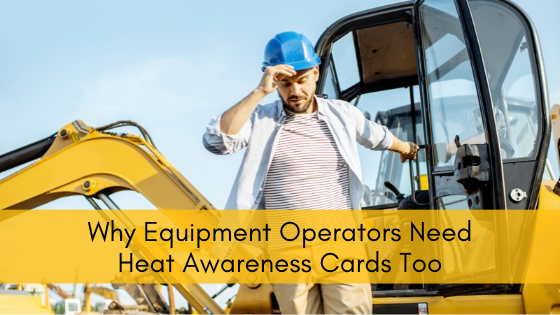
Equipment operators often work inside air conditioned cabs, and compared to most people on a worksite, they are not usually exposed to the same heat-related risks. However, equipment operators need heat awareness cards, too, for several reasons. While it may seem like equipment operators are immune to heat concerns on the job, there are good reasons to make sure they have the tools they need to track temperature.
In This Article
- Equipment operators transition in and out of the cab frequently
- Moving from a climate-controlled environment to a hot one can shock the system
- Elevated heat stress impacts decision making and reaction time
- Equipment operators have a wider view of the job site
- Heavy equipment generates additional heat and elevates thermal risks
- Cab cooling systems can fail and spike heat risks
- How heat awareness cards provide better safety on jobsites
- Keeping equipment operators and their coworkers heat aware
- Related pages
- Frequently asked questions
Six Reasons Why Equipment Operators Need Heat Awareness Cards Too
Heat awareness cards provide up to the moment information about ambient temperatures and, by extension, thermal risks. This information is important for everyone on your worksite, including your equipment operators. Here are six reasons why they should carry heat awareness cards as well.
Equipment operators transition in and out of the cab frequently
Equipment operators have to jump in and out of their cab often, either to reposition their equipment, perform safety and maintenance checks, consult with other onsite workers or refuel. Every time your equipment operators climb out of their cab, they are exposed to the same heat hazards that the rest of your onsite workers contend with. If they have heat awareness cards on them, they will be able to track those heat hazards as they get in and out of their cab.
Moving from a climate-controlled environment to a hot one can shock the system
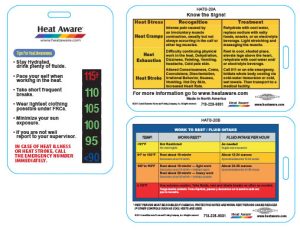 While equipment operators may be protected by their air conditioned cab, working in a climate-controlled space also affects their ability to tolerate heat. As they move from inside their cab to the outside environment, the sudden increase in temperature can shock their system and increase the risk of dehydration or heat exhaustion. A heat awareness card lets an operator check the temperature every time they step down from the cab, instead of guessing.
This is where the card’s response time matters. According to the Heat Aware product FAQ, the card’s liquid crystal registers the temperature within a degree when it is used and viewed properly, and it reregisters every 20 seconds, which Heat Aware notes is important when moving from one area to another with a significant temperature change. That is the exact situation an operator is in every time the cab door opens.
Elevated heat stress impacts decision making and reaction time
If one of your equipment operators is compromised by heat illness, it will affect their ability to do their job safely. Heat exhaustion reduces reaction speed and decision making, which is particularly risky when in charge of heavy equipment. If one of your equipment operators is affected by heat stress, it is a danger for them and for any nearby workers.
Equipment operators have a wider view of the job site
 Equipment operators typically have an expanded view of the worksite, as they are largely stationary and are situated off the ground. From this position, equipment operators can see if a worker is experiencing heat stress and respond faster than people on the ground.
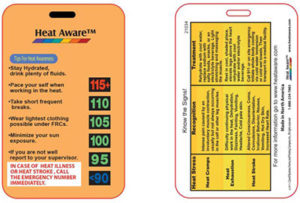
With a heat awareness card, your equipment operators will know when heat risks are elevated and can begin looking out for their fellow workers. The HATS-20A version of the HATS-20 Heat Aware Card carries the signs, symptoms and treatment of heat illnesses on its backer, so the operator has the warning signs in hand while watching the crew.
Heavy equipment generates additional heat and elevates thermal risks
Heavy equipment creates additional heat that must be accounted for when assessing the risk of heat illness on the jobsite. Engines, hydraulic systems and metal surfaces are hotspots that can make it tougher on any workers nearby. With a heat awareness card, equipment operators can read the temperature near the machine and see whether that additional thermal energy has pushed conditions into a higher risk range. Remember that the card reads air temperature, not humidity, so pair it with a heat index chart when the air is humid.
Cab cooling systems can fail and spike heat risks
Even if your equipment operators spend much of their time in a climate-controlled cab, cooling systems can always fail. Clogged filters and poor ventilation are two reasons why climate control may be taken temporarily offline. No matter the reason, a heat awareness card in the cab tells the operator that conditions have changed, so they can take a break in a cool area, drink water and report the problem before heat stress builds.
How Do Heat Awareness Cards Provide Better Safety on Jobsites?
Heat Aware Cards are TWIC-sized, so they fit with the other cards a worker already carries, and the HATSC-30 custom card can be printed with your company’s logo and safety information. They are made with integrated liquid crystal thermometers (LCTs) that provide a rapid, accurate temperature reading. The cards are made of laminated PVC and are waterproof, according to Heat Aware, and because they are light and compact, they can be kept in a breast pocket, worn on a lanyard or kept in the cab where the operator can see them. Compared to other temperature tracking tools, heat awareness cards are inexpensive, simple to use and easy to hand out to an entire crew.
A card works best as part of a plan. Tie the temperature an operator reads to a specific response, such as more frequent breaks or a stop to cool down, and write those responses into your heat illness prevention program so everyone on the site follows the same rules.
Keep Equipment Operators and Their Coworkers Heat Aware
It may seem like the last person onsite who needs heat awareness is an equipment operator, but there are several reasons why that is not the case. Cooling systems can fail, operators have to exit their cab frequently and sudden exposure to intense heat can cause heat risks to spike, even without prolonged exposure.
The best defense against heat illness is information. Heat awareness cards provide this information in a simple, inexpensive format that helps your equipment operators know what to expect regarding heat risks. For more on how the cards are used across a crew, read Can a Heat Safety Card Save a Life?
Browse the HATS-20 Heat Aware Card, the HATS40 card with label and the HATSC-30 custom card, or see everything in the Heat Aware shop. For pricing, availability, volume and custom or branded orders, email Bryan Slaven at bryan@heataware.com.
Related pages
- Heat index chart for workers. The temperature and humidity values behind the reading on the card, and the risk level each one falls in.
- How to run a heat stress toolbox talk. The ten minute talk that puts the card in an operator’s hand and explains what to do with it.
- What a heat stress management system includes. Where cards sit alongside signs, decals and cooling on a full system.
- How road construction crews stay out of heat stroke danger. The same cab-to-pavement exposure, from the crew’s side of the job.
- Recognizing heat stress on the jobsite. What the early stages look like in somebody who is still working.
- Heat illness prevention program: what to put in writing. The written plan the card’s reading should tie back to.
- Shop heat stress products. Cards, signs, decals and cooling products in one place.
Frequently Asked Questions
Do equipment operators in air conditioned cabs need heat stress training?
Yes. Operators climb out of the cab to refuel, run safety and maintenance checks and talk with the crew, and each time they step into the same heat as everyone else on the site. The sudden change from a cooled cab to outdoor heat is a risk of its own, so operators belong in the same heat awareness training and procedures as the rest of the crew.
Does a Heat Aware Card read body temperature?
No. According to Heat Aware, the card registers ambient temperature, the temperature of the surrounding area, not the body temperature of the person carrying it.
How quickly does the card update when an operator leaves the cab?
Heat Aware states that the card’s liquid crystal registers the temperature within a degree when properly used and viewed, and that it reregisters every 20 seconds. That matters when moving between areas with a large temperature difference, such as a cooled cab and an open jobsite.
What should an operator do if the cab’s air conditioning fails?
Treat the cab as a hot work area until the cooling is fixed. The operator should take breaks in a cool area, drink water, report the failure and watch for early signs of heat illness, following your written heat illness prevention program.
Can heat awareness cards carry our company branding?
Yes. Heat Aware offers the HATSC-30 Custom TWIC-sized card, which can be printed with your corporate logo, colors and information specific to your health, safety and environment group. Contact bryan@heataware.com for custom and branded orders.


