
Heat is the number one weather related killer in the United States, but the way it reaches a worker depends on the job. A refinery operator in flame resistant clothing, a road crew on fresh asphalt, a baker beside an oven line and a football player on a summer practice field all face heat stress, and each one gets there by a different route. A heat program that works treats those routes differently.
This page sorts heat stress by industry: where the heat comes from, who is exposed, and what a heat stress management system looks like in that setting.
What Changes From One Industry to the Next
Four things decide how heat stress shows up on a given site:
- The heat source: Sun and humidity outdoors, or radiant heat from furnaces, ovens, kilns and process equipment indoors. Indoor heat does not follow the weather report.
- What workers wear: Flame resistant clothing, chemical protective suits, respirators and other heavy PPE trap heat and block the evaporation of sweat.
- How the work runs: Long continuous tasks, shutdowns and turnarounds, or short bursts of heavy effort all load the body differently.
- Who is on the crew: New hires and contractors who are not yet acclimatized carry more risk than a crew that has worked through the season.
Those four factors change the details. They do not change the basics: recognize the signs, read the conditions where the work is, and tie the reading to a response.
Heat Stress by Industry
Refineries and petrochemical plants
Process heat, Gulf Coast humidity and layered protective clothing stack up in the same place. Turnarounds bring in large contractor crews who may not be acclimatized. Read the full guide to heat stress in refineries and petrochemical plants.
Construction and road crews
Full sun, radiant heat off pavement and concrete, and steady physical work. Equipment operators move between cooled cabs and the open site many times a shift. See heat stroke danger for road construction crews and why equipment operators need heat awareness cards too.
Manufacturing, bakeries and cement
Indoor heat from ovens, furnaces and kilns that runs all year, not just in summer. A plant can be dangerous on a mild day outside. See heat awareness in manufacturing facilities and a heat safety plan for cement operations.
Athletics and athletic training
Practices in the hottest part of the day, equipment that holds heat, and athletes who push through symptoms. See sports and heat awareness tips and managing heat in high school football.
What Stays the Same Everywhere
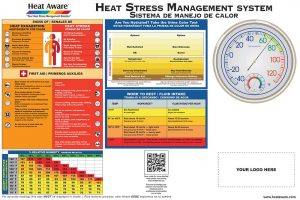 Every industry on this page needs the same three things. A written heat illness prevention program that says what happens at each level and who decides. A way to read conditions where the work is happening, not at the nearest weather station, using the heat index. And awareness tools that put the signs and the reading in front of the crew.
That combination is what Heat Aware means by a heat stress management system: heat stress management system signs at cool-down areas, Heat Aware Cards carried by each worker, and hard hat stickers as a constant reminder, all tied to the program.
Build heat awareness around how your site actually works. Heat Aware signs, cards and stickers can carry your company branding and fit plants, jobsites and practice fields alike.
Browse the Heat Aware shopWhat a heat stress system includes
Frequently Asked Questions
Which industries have the highest risk of heat stress?
Any industry that combines heat with physical work or heavy protective clothing. Common examples are refineries and petrochemical plants, construction and road work, manufacturing with ovens, furnaces or kilns, bakeries, cement operations and athletics.
Is indoor heat stress as serious as outdoor heat stress?
Yes. Radiant heat from ovens, furnaces and process equipment can create dangerous conditions indoors on a mild day, and indoor heat runs year round rather than only in summer.
Why does protective clothing increase heat stress?
Flame resistant clothing, chemical protective suits and respirators trap heat and block sweat from evaporating, which is how the body sheds heat. Workers in heavy PPE can reach dangerous levels of heat stress at lower temperatures.
What does a heat stress management system include?
A written heat illness prevention program plus awareness tools that make conditions visible: heat stress management system signs at cool-down areas, Heat Aware Cards carried by workers and hard hat stickers, all tied to clear responses at each heat level.