
Heat stress training fails in a predictable way. The meeting happens once in the spring, the slides are good, and by July nobody on the crew could list the signs of heat stroke. The training was not wrong. It just did not reach the moment a worker needed it.
This page covers what heat illness prevention training should include, the free material worth using, and how to turn a one-time session into something workers carry through the season.
What Heat Stress Training Should Cover
OSHA says supervisors and workers should be trained on heat hazards, prevention and first aid, and lists these topics:
- The types of heat-related illness and how to recognize their signs and symptoms
- Providing first aid to an affected worker immediately
- Procedures for contacting emergency medical services
- Protecting new, unacclimatized workers and the work practices that help them build acclimatization
- Job-related and personal risk factors for heat-related illness
- Fluid replacement guidelines
- Appropriate work and rest cycles, including mandatory rest breaks when heat stress is high
- Taking rest breaks in cooler areas, such as shade or air-conditioned rooms
Two additions make that list work on a real site: how your crew reads the day’s conditions using the heat index, and what your written heat illness prevention program says happens at each level. Training that covers the illness but not the site’s own rules leaves workers knowing what to fear without knowing what to do.
Free Training Materials Worth Using
OSHA publishes a Heat Illness Prevention Training Guide for running sessions, and its heat publications include a poster in 11 languages, a heat emergency wallet card, illustrated fact sheets and a brochure in 21 languages. Use them. For a short, repeatable format, our heat stress toolbox talk guide lays out how to run a five to ten minute session at the start of a shift.
For the difference between free posters and a sign that shows the day’s conditions, see free heat stress posters vs a heat stress management system sign.
Making Training Last Past the Meeting
The goal is to put the training content where the work happens, so workers see it again on the hot days that matter. Heat Aware’s awareness tools are built for that:
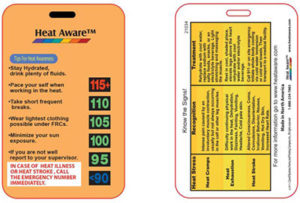 Heat Aware Cards put the content in every worker’s pocket. The HATS-20A backer carries the signs, symptoms and treatment of heat illnesses, and the HATS-20B backer carries a work and rest fluid intake guide, alongside a liquid crystal reading of the ambient temperature. A card handed out at the end of a training session is the part of the session that goes home with the worker.
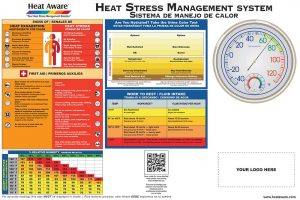 Heat stress management system signs turn the cool-down area into a refresher. The sign shows the ambient temperature and relative humidity, so the crew practices reading the heat index every time they stop for water.
Hard hat stickers keep a short message such as staying hydrated in view all shift, every shift.
Training by Role
- New and returning workers – Acclimatization first. Workers who are new to the heat or coming back after time away are at higher risk in their first days. See dealing with heat when you are not accustomed to it.
- Every crew member – Recognition and response. Coworkers usually spot heat illness first, so everyone needs to know the signs of heat exhaustion and heat stroke and the rule OSHA gives: when in doubt, cool the worker and call 911.
- Supervisors – Decisions. Reading the conditions, applying the work and rest schedule, adjusting for PPE, and knowing who makes the call to stop work.
Branded and Translated Materials
Training material carries more weight when it looks like part of your own program. The HATSC-30 custom card can be printed with your corporate logo, colors and information specific to your HS and E group, and Heat Aware’s heat stress management system signs are printed with your company logo. According to the Heat Aware FAQ, the custom card has been translated into Spanish, Korean and Portuguese, with sources available for other translations. Ask about custom and branded orders through the contact page.
Give your next training session something to take home. Heat Aware Cards, system signs and hard hat stickers keep the signs, symptoms and the day’s conditions in front of the crew all season.
Frequently Asked Questions
What should heat illness prevention training include?
OSHA lists the types of heat illness and their signs and symptoms, immediate first aid, how to contact emergency medical services, protecting new and unacclimatized workers, job-related and personal risk factors, fluid replacement, work and rest cycles, and taking breaks in cooler areas.
Who needs heat stress training?
OSHA says both supervisors and workers should be trained on heat hazards, prevention and first aid. New and returning workers need extra attention on acclimatization.
How often should heat stress training happen?
Train before the hot season starts and reinforce it with short toolbox talks when conditions change, when new workers arrive and before high-heat work such as turnarounds.
Can heat stress training materials be customized with our company logo?
Yes. Heat Aware’s HATSC-30 custom card can be printed with your corporate logo, colors and HS and E information, and its heat stress management system signs are printed with your company logo.